

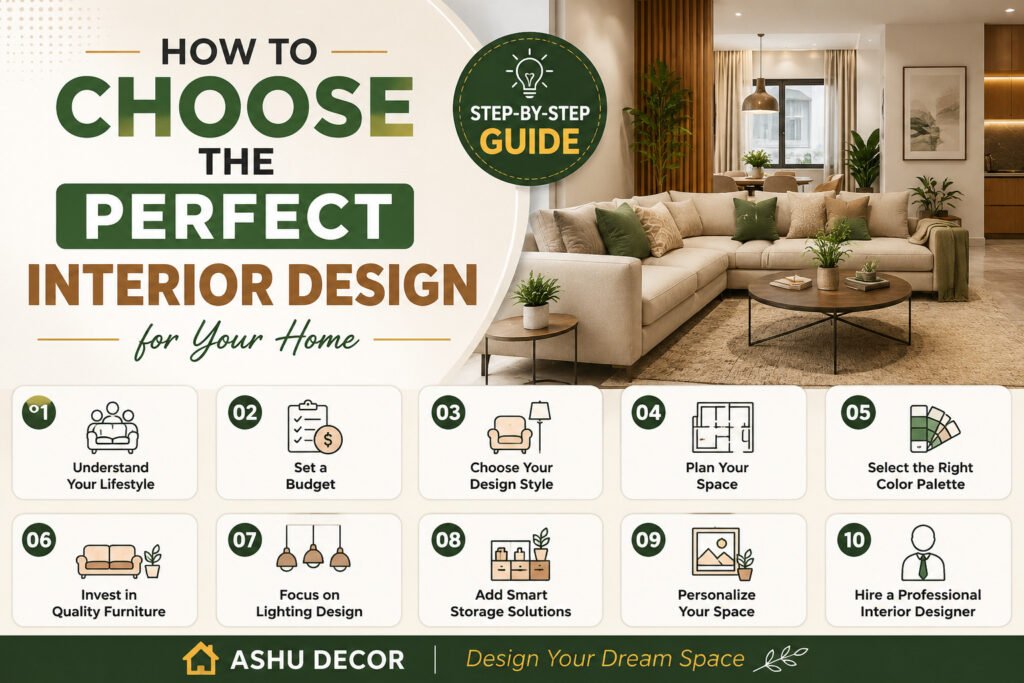
How to Choose the Perfect Interior Design for Your Home: A Step-by-Step Guide
Your home is more than just a place to live—it’s where memories are made, families grow, and comfort begins. Choosing the right interior design can transform your house into a beautiful, functional, and personalized space. However, with countless design styles, furniture options, and décor ideas available, making the right choice can feel overwhelming.
This step-by-step guide will help you choose the perfect interior design for your home with confidence.
Step 1: Understand Your Lifestyle
Before selecting colors, furniture, or décor, think about how you use your home.
Ask yourself:
- Do you have children or pets?
- Do you work from home?
- Do you entertain guests frequently?
- Do you need extra storage?
- Which rooms do you use the most?
Your interior design should support your daily routine while making your life more comfortable.
Pro Tip: A family with young children may prefer durable furniture and easy-to-clean materials, while a professional working from home may prioritize a stylish and functional home office.
Step 2: Set a Realistic Budget
A clear budget helps you make smart decisions and avoid overspending.
Your budget should include:
- Furniture
- Wall finishes
- Flooring
- Lighting
- Curtains
- Decorative accessories
- Storage solutions
- Labor and installation costs
Prioritize quality for long-term value instead of focusing only on the lowest price.
Step 3: Choose Your Interior Design Style
Selecting a design style creates consistency throughout your home.
Popular styles include:
Modern
- Clean lines
- Neutral colors
- Minimal decoration
- Functional furniture
Contemporary
- Trend-focused
- Open spaces
- Stylish lighting
- Simple elegance
Minimalist
- Less clutter
- Neutral shades
- Functional spaces
- Maximum simplicity
Traditional
- Rich wood finishes
- Elegant furniture
- Warm color palettes
- Classic décor
Scandinavian
- Bright interiors
- Natural wood
- Cozy textures
- Simple furniture
Industrial
- Exposed brick walls
- Metal finishes
- Open ceilings
- Rustic furniture
Choose the style that matches your personality and complements your home’s architecture.
Step 4: Plan Your Space Carefully
Good interior design starts with smart space planning.
Consider:
- Furniture placement
- Walking space
- Storage requirements
- Natural lighting
- Room functionality
Avoid overcrowding rooms with unnecessary furniture.
Every piece should have a purpose.
Step 5: Select the Right Color Palette
Colors influence mood, comfort, and the perception of space.
Popular combinations include:
- White & Grey for a modern look
- Beige & Brown for warmth
- Blue & White for freshness
- Olive Green & Cream for natural elegance
- Black & Gold for luxury
Use lighter shades to make small rooms feel larger and darker tones to create a cozy atmosphere.
Step 6: Invest in Quality Furniture
Furniture is one of the biggest investments in your home.
Choose pieces that offer:
- Comfort
- Durability
- Functionality
- Timeless style
Modular furniture is an excellent choice because it maximizes space while maintaining a modern appearance.
Examples include:
- Modular kitchens
- Sliding wardrobes
- Storage beds
- Foldable dining tables
- Multi-purpose sofas
Step 7: Focus on Lighting Design
Lighting can completely transform a room.
Use a combination of:
Ambient Lighting
Provides overall illumination.
Task Lighting
Ideal for kitchens, study rooms, and workspaces.
Accent Lighting
Highlights artwork, shelves, and architectural features.
Natural daylight should also be maximized through large windows and light-colored curtains.
Step 8: Add Smart Storage Solutions
A clutter-free home feels larger and more inviting.
Consider:
- Built-in wardrobes
- Floating shelves
- Hidden storage beds
- Modular cabinets
- Under-stair storage
- Kitchen organizers
Effective storage keeps your home organized without sacrificing style.
Step 9: Personalize Your Space
Your home should reflect your personality.
Add personal touches such as:
- Family photographs
- Artwork
- Indoor plants
- Decorative mirrors
- Handmade décor
- Designer cushions
- Statement rugs
These details make your home unique and welcoming.
Step 10: Hire a Professional Interior Designer
While DIY projects can be enjoyable, professional designers bring expertise that helps avoid costly mistakes.
An experienced interior designer can assist with:
- Space planning
- Material selection
- Budget management
- Color coordination
- Furniture layout
- Lighting design
- Custom furniture solutions
- Project execution
Working with professionals saves time, reduces stress, and ensures a polished final result.
Common Mistakes to Avoid
Many homeowners make avoidable design mistakes. Watch out for these:
- Choosing furniture that’s too large for the room
- Ignoring natural light
- Using too many colors in one space
- Overdecorating with accessories
- Neglecting storage planning
- Following trends without considering practicality
- Buying furniture before measuring the space
Planning ahead helps create a home that is both beautiful and functional.
Why Choose Ashu Decor?
At Ashu Decor, we believe every home deserves thoughtful design and quality craftsmanship. Our team specializes in creating interiors that combine style, comfort, and functionality.
Our services include:
- Home Interior Design
- Modular Kitchen Design
- Wardrobe Design
- Living Room Interiors
- Bedroom Interiors
- Space Planning
- Furniture Solutions
- Home Décor Consultation
We work closely with our clients to design spaces that reflect their lifestyle, preferences, and budget.
Final Thoughts
- Define your style and needs.
- Plan your space wisely.
- Set a realistic budget.
- Choose quality materials.
- Use smart storage solutions.
- Balance style with functionality.
- Personalize your home.
- Consult a professional designer when needed.